Organic Geometry System
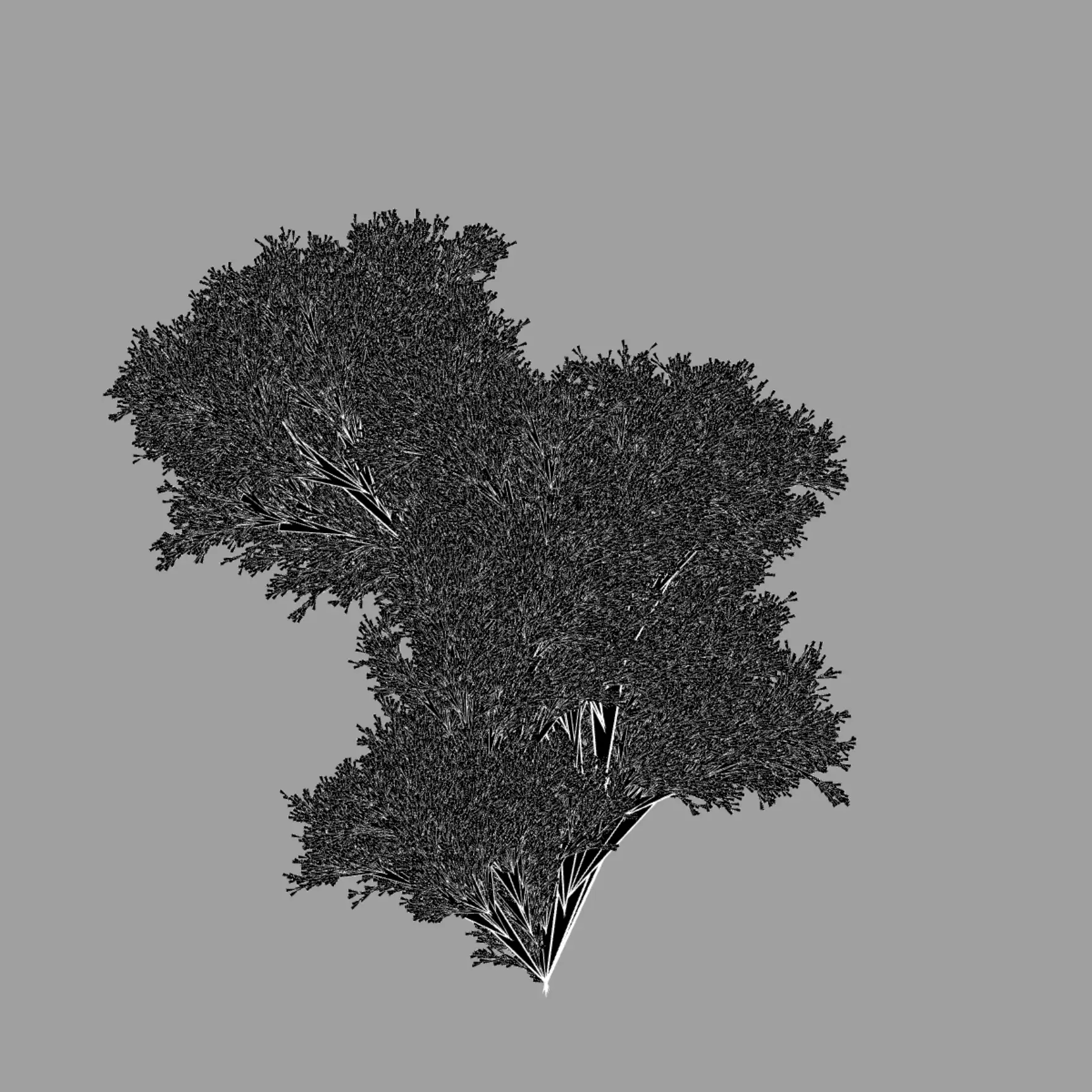
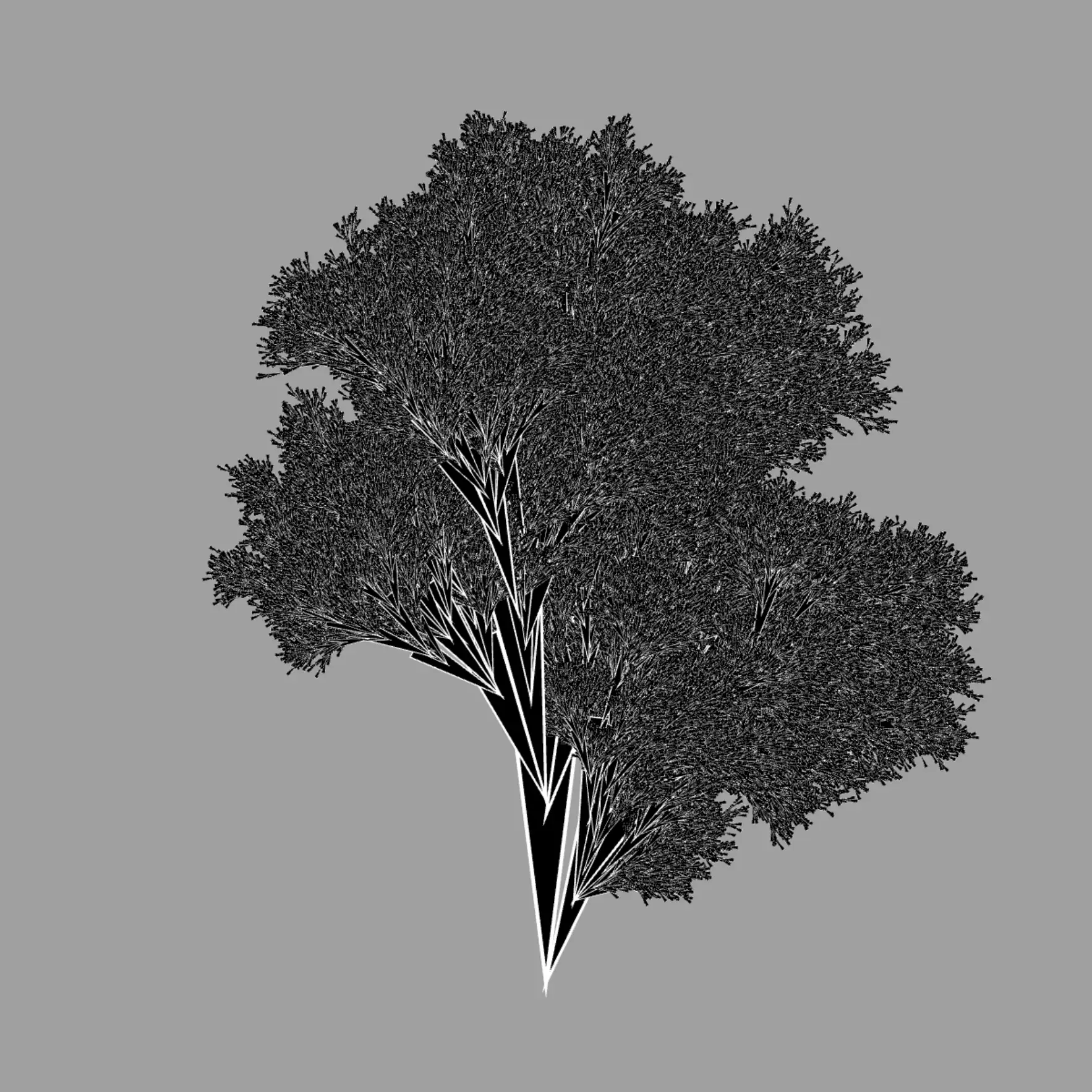
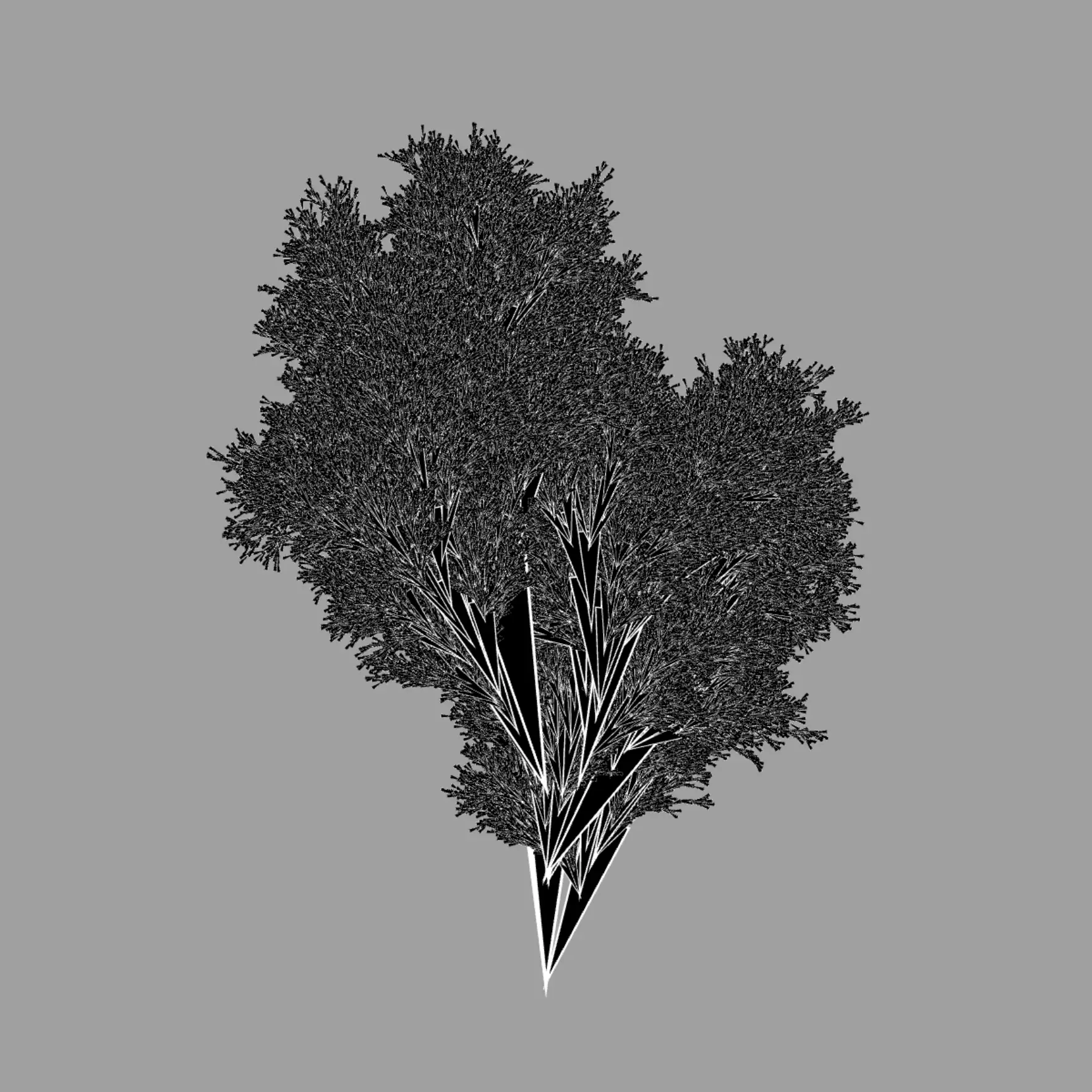
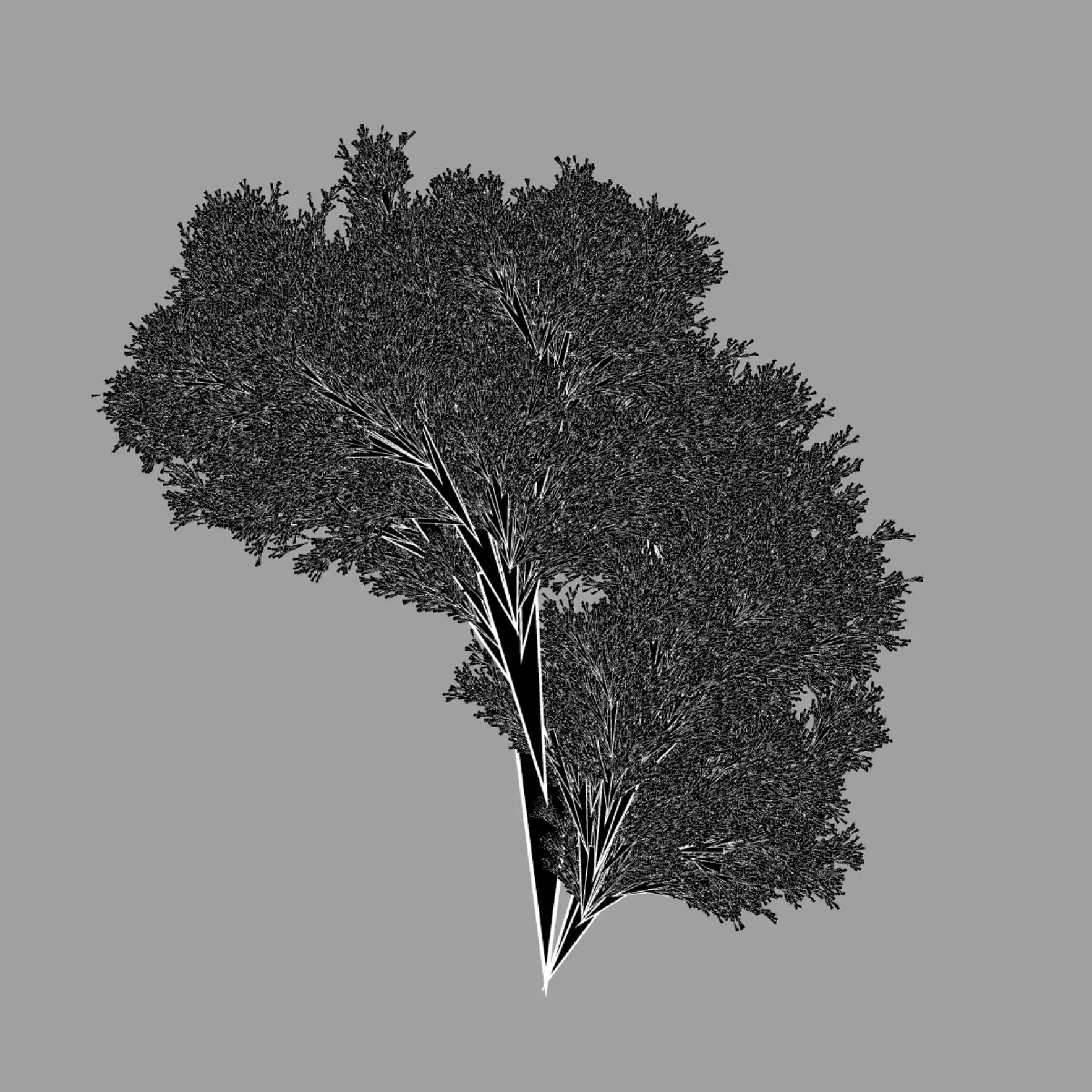
A tree generated from pure geometric repetition. By recursively spawning triangles with subtle variations in rotation and offset, the algorithm produces a structure that feels alive without abandoning abstraction.
A Genuary 2026 project
This project is part of Genuary 2026, an annual creative coding challenge that invites artists to respond to daily prompts throughout the month of January.
It was created in response to the January 25 theme, "Organic Geometry".
Genuary is an annual creative coding challenge held every January.
Each day comes with a prompt that encourages artists and developers to explore new constraints, algorithms, and visual systems.
It has become a global event where generative artists share experiments, push technical limits, and rethink the relationship between code and art.
You can explore my complete 2025 Genuary series here: Genuary 2025 – Full Series.
Genuary 2026 · Jan. 25
Organic Geometry — Forms that look or act organic but are constructed entirely from geometric shapes.(credit: Manuel Larino)
This prompt inspired me to create a tree made only of triangles, where the organic feel emerges from the system of repetition and variation rather than from the shapes themselves.
Tree made only with triangles is my answer to a simple constraint: build something that feels alive, but using only strict geometry. No textures, no brushes — just recursion, rotation, and a single primitive repeated until it becomes organic.
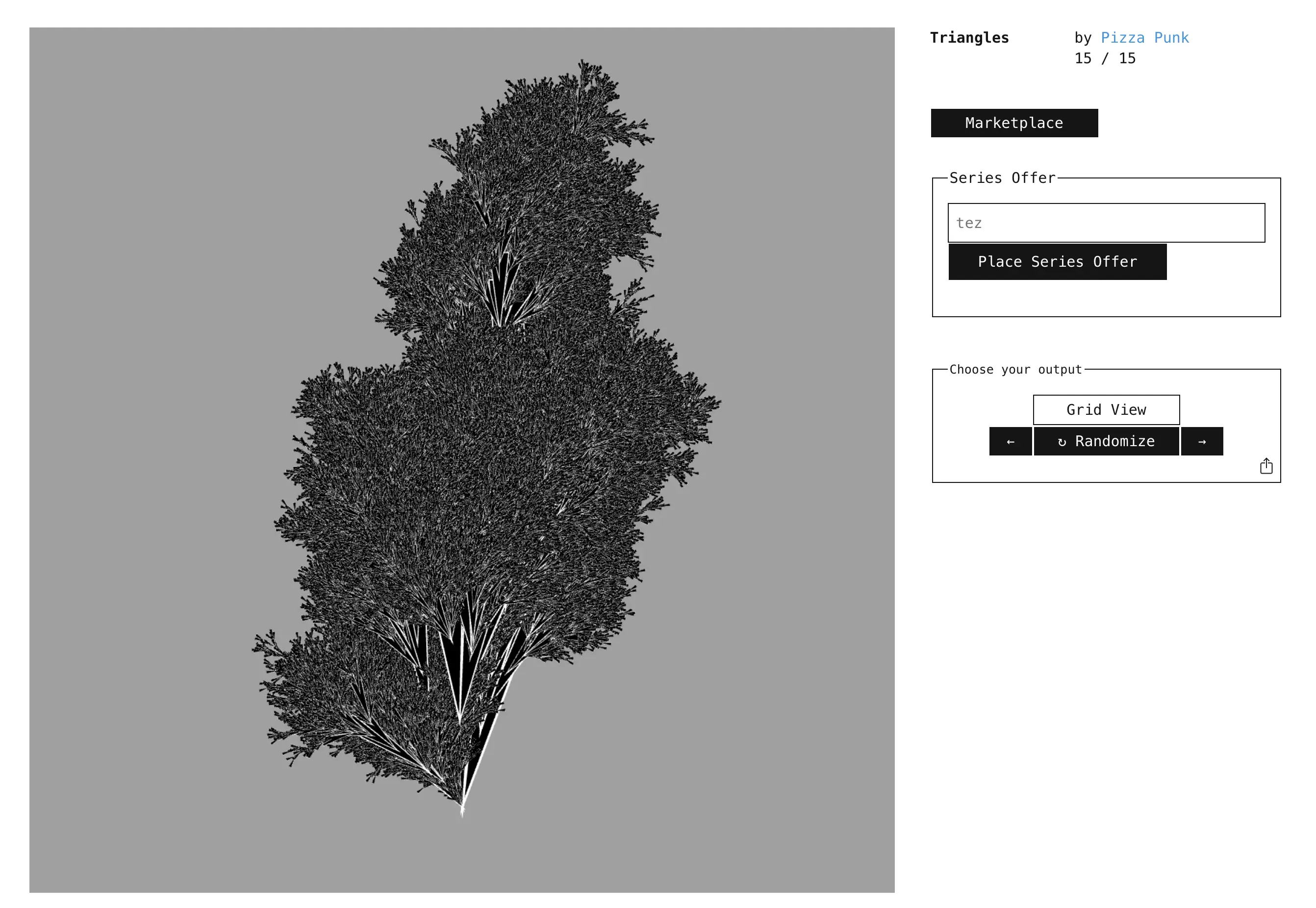
The long-form generative project on editart.xyz
Concept
The idea is straightforward: a tree, but made only of triangles. Each triangle acts like a “branch segment”. By repeating the same shape through a recursive procedure, the structure gradually transforms from a rigid symbol into a living-looking form.
What makes it feel organic is not the shape itself, but the system of variation: subtle randomness in rotation, vertical offsets, and progressive scaling.
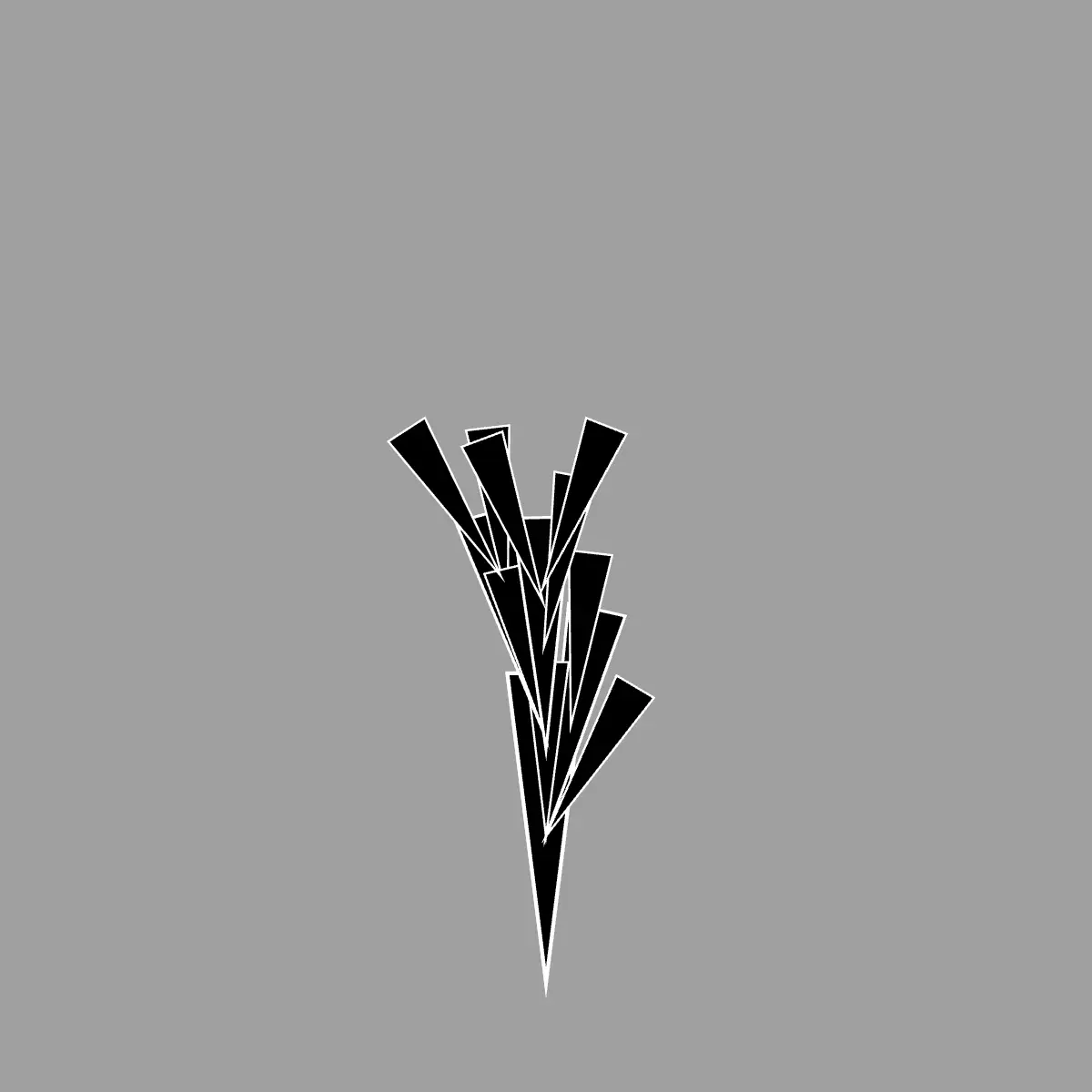
2 generations
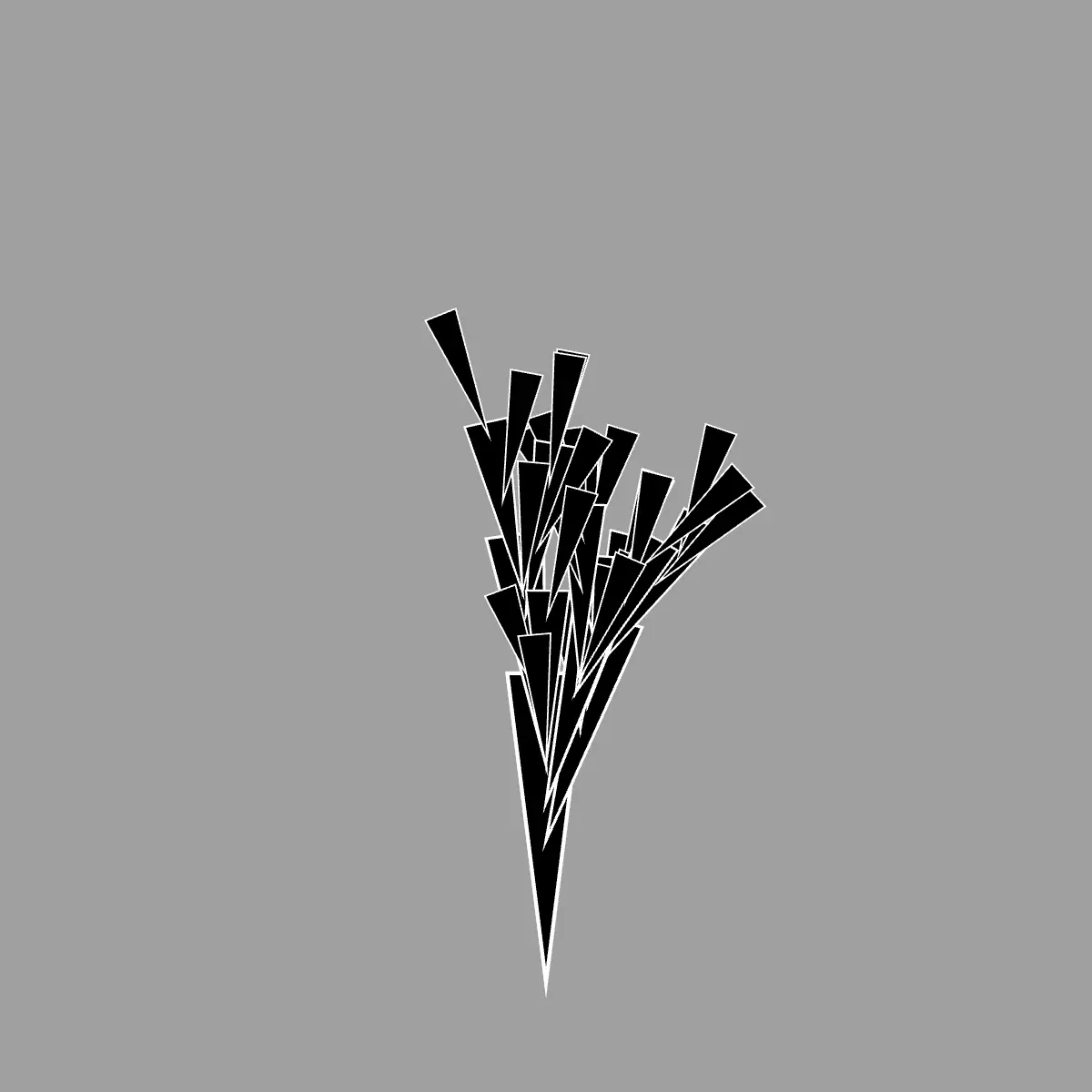
3 generations
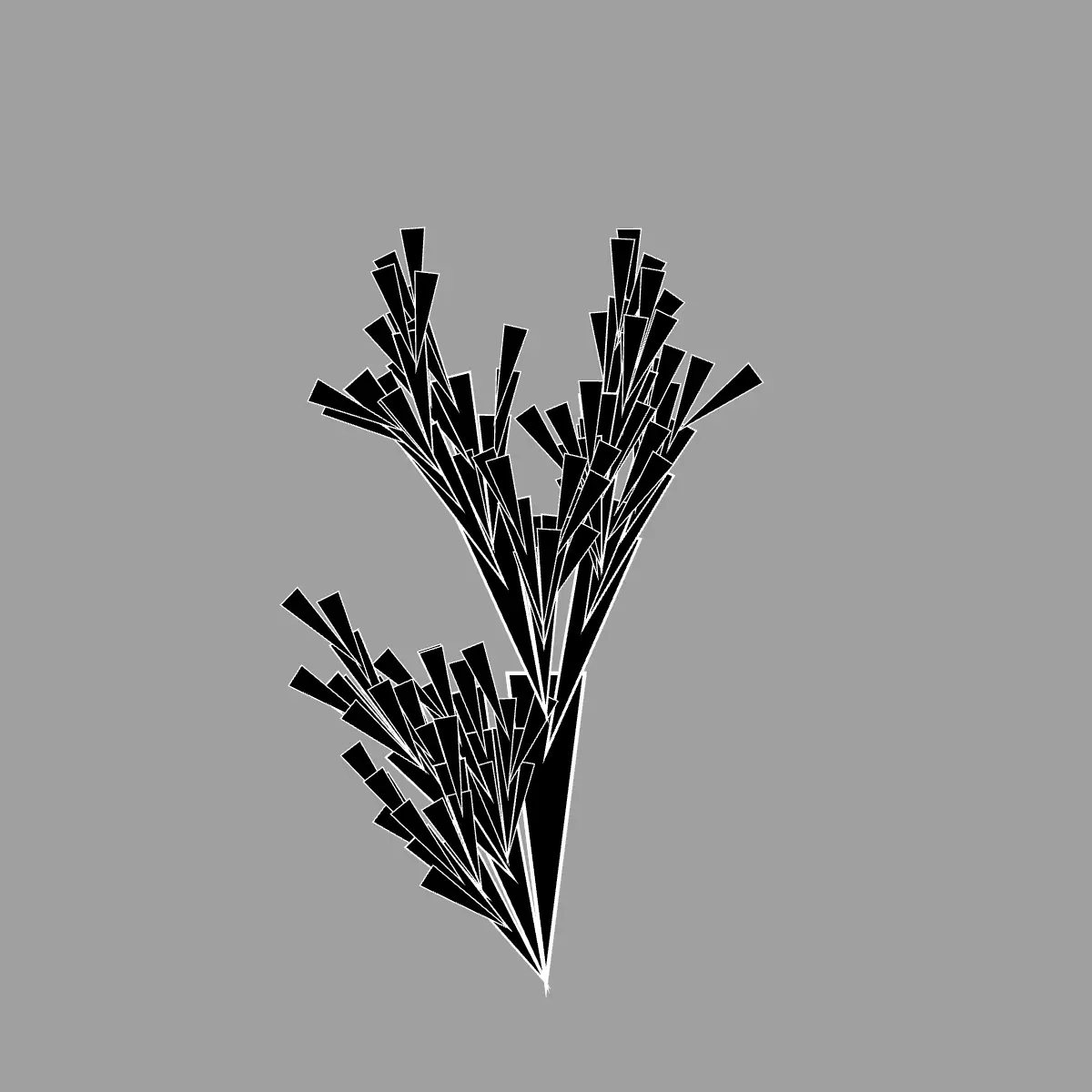
4 generations
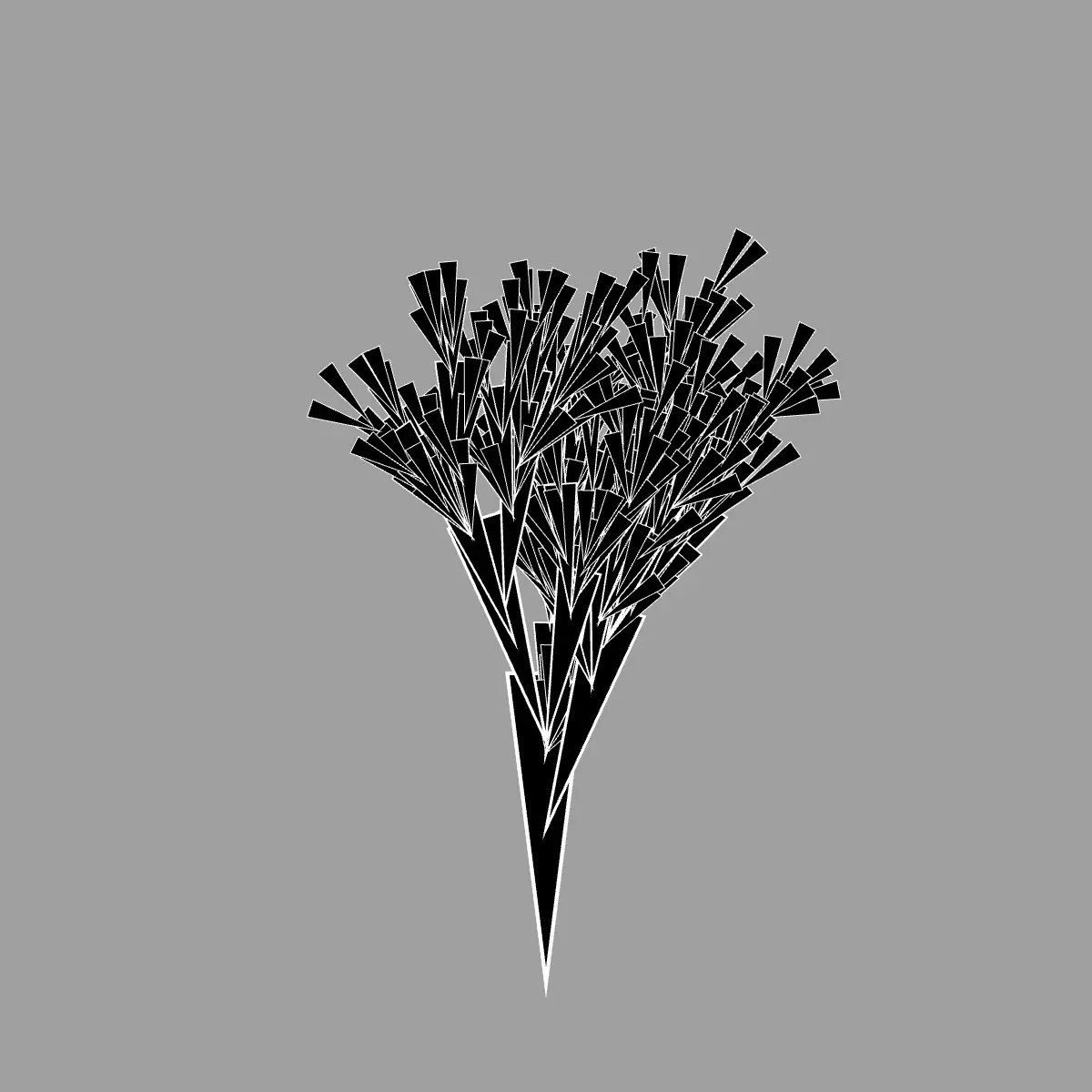
5 generations
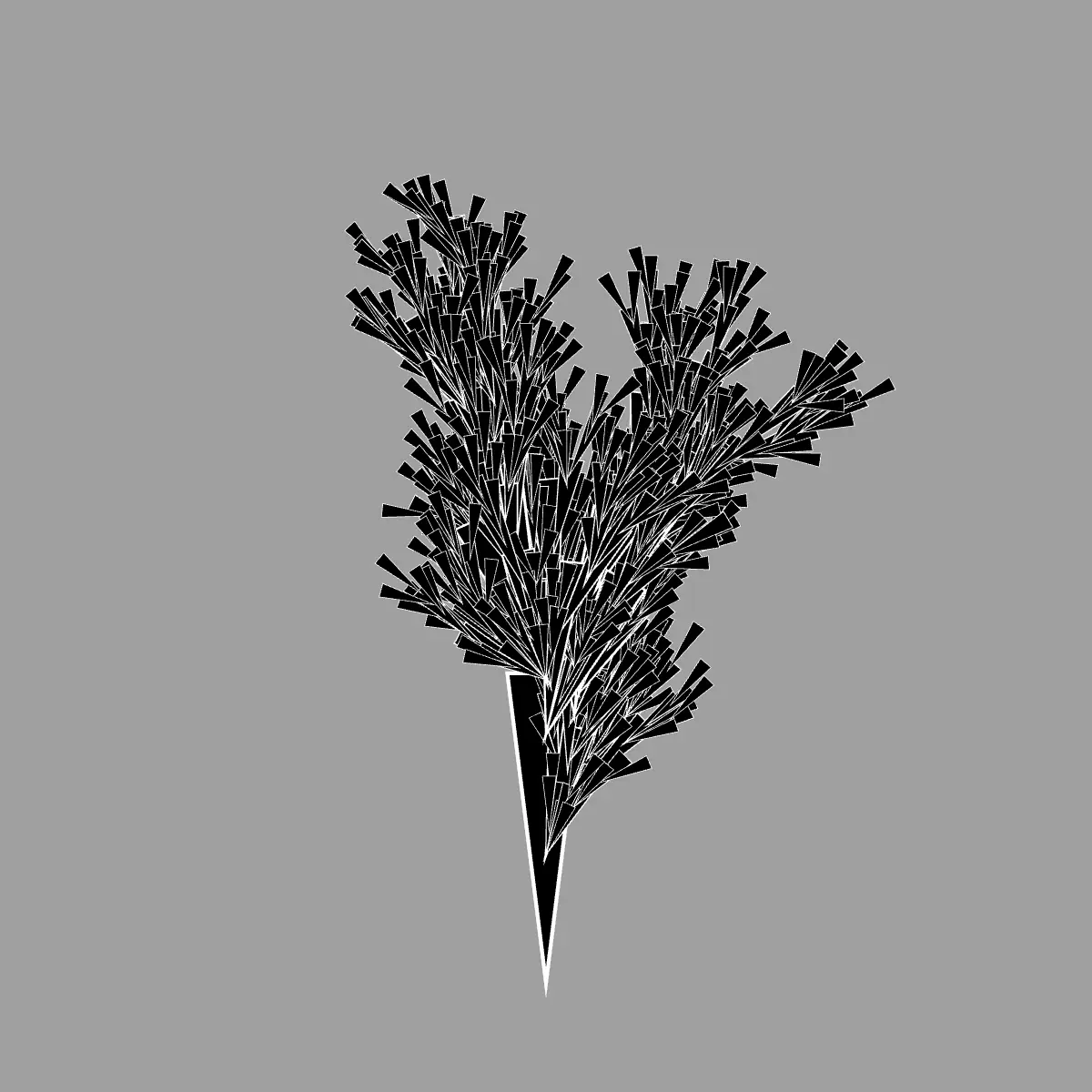
6 generations
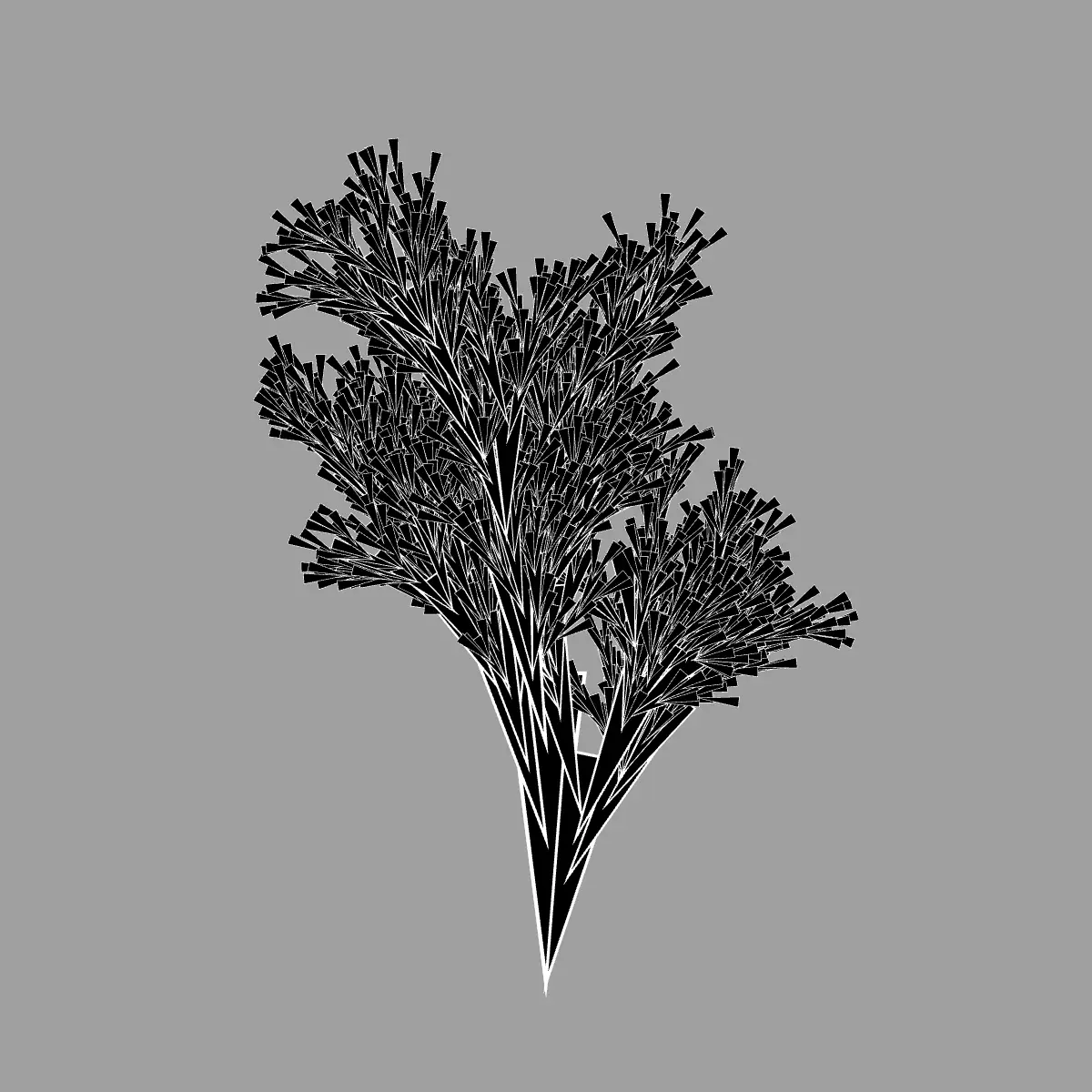
7 generations
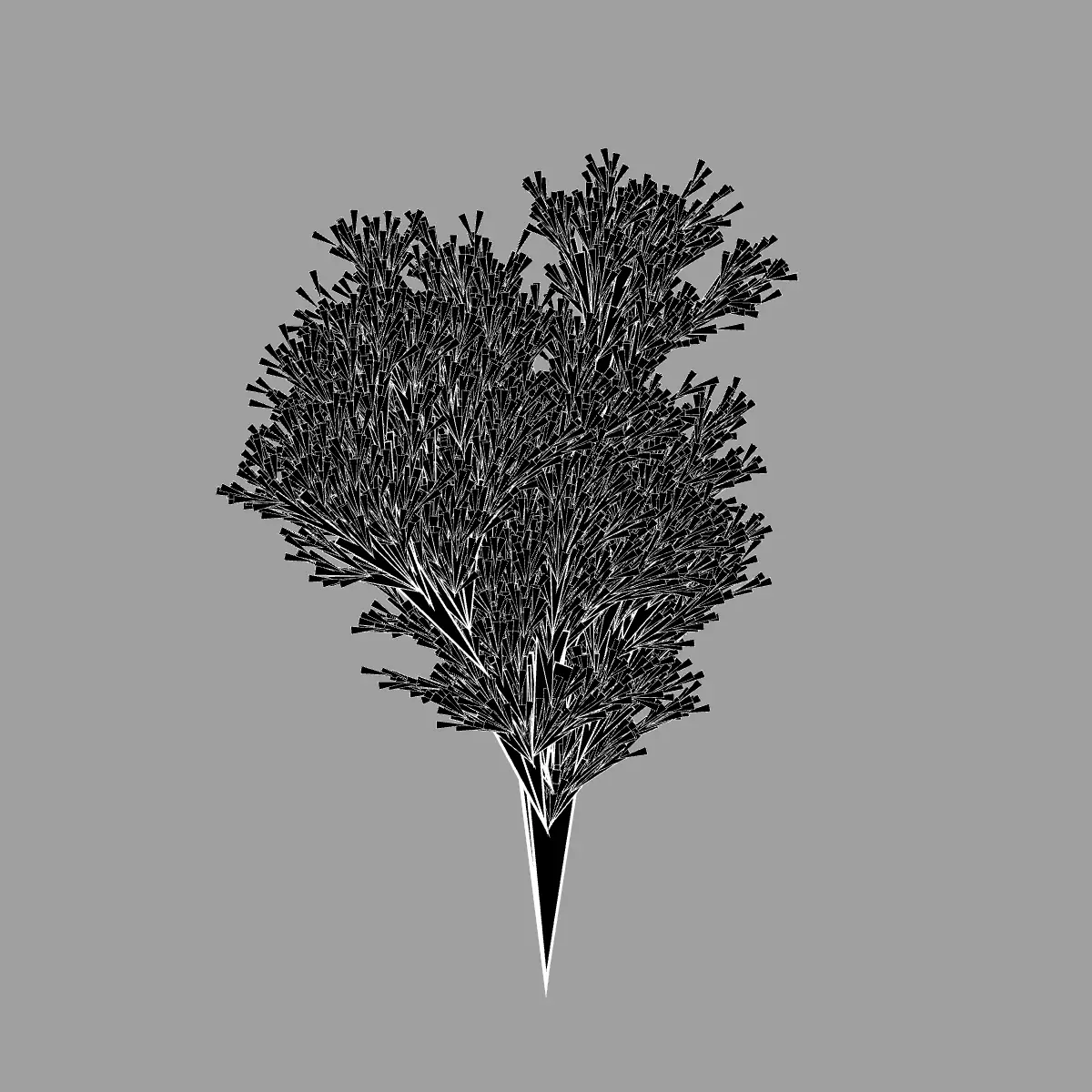
8 generations
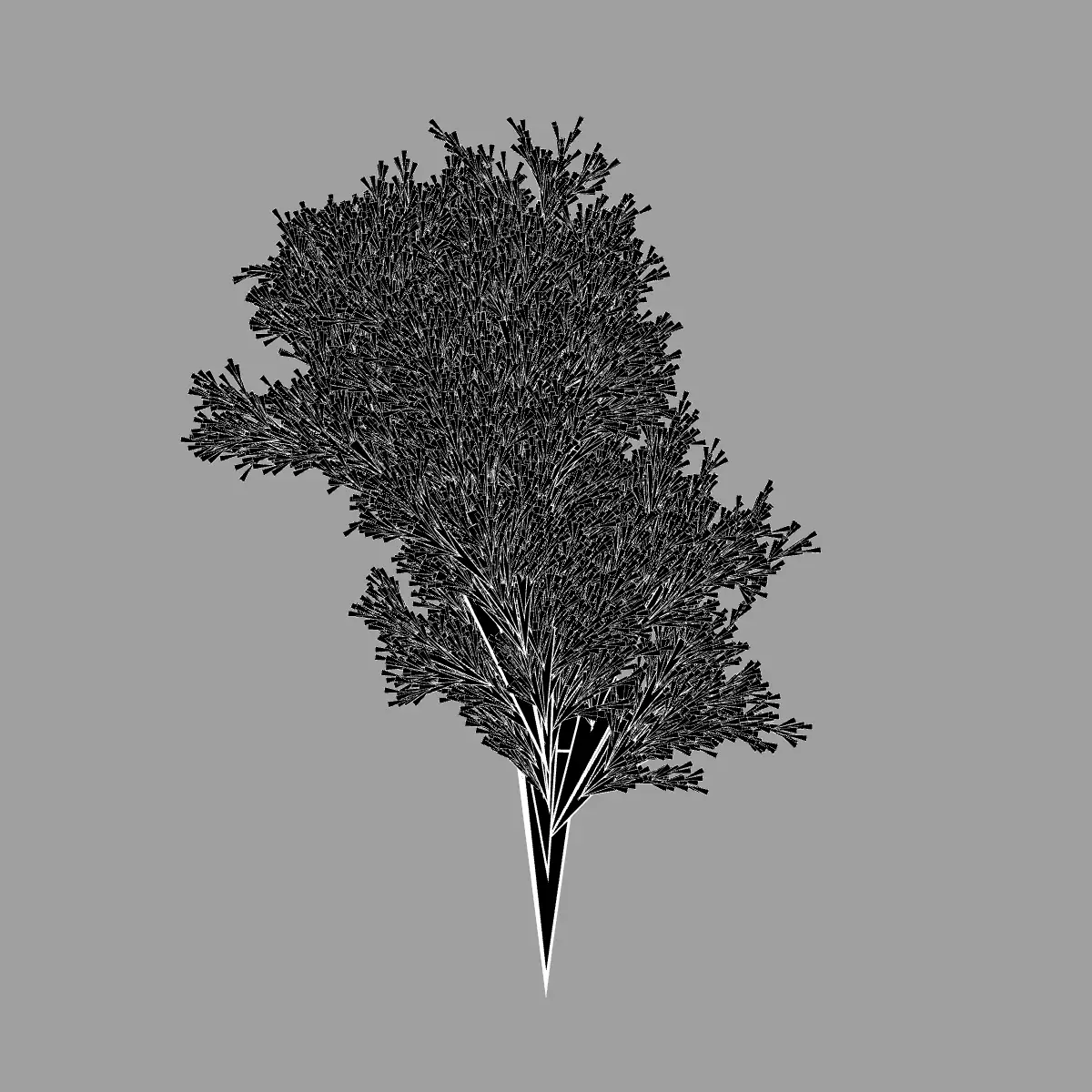
9 generations
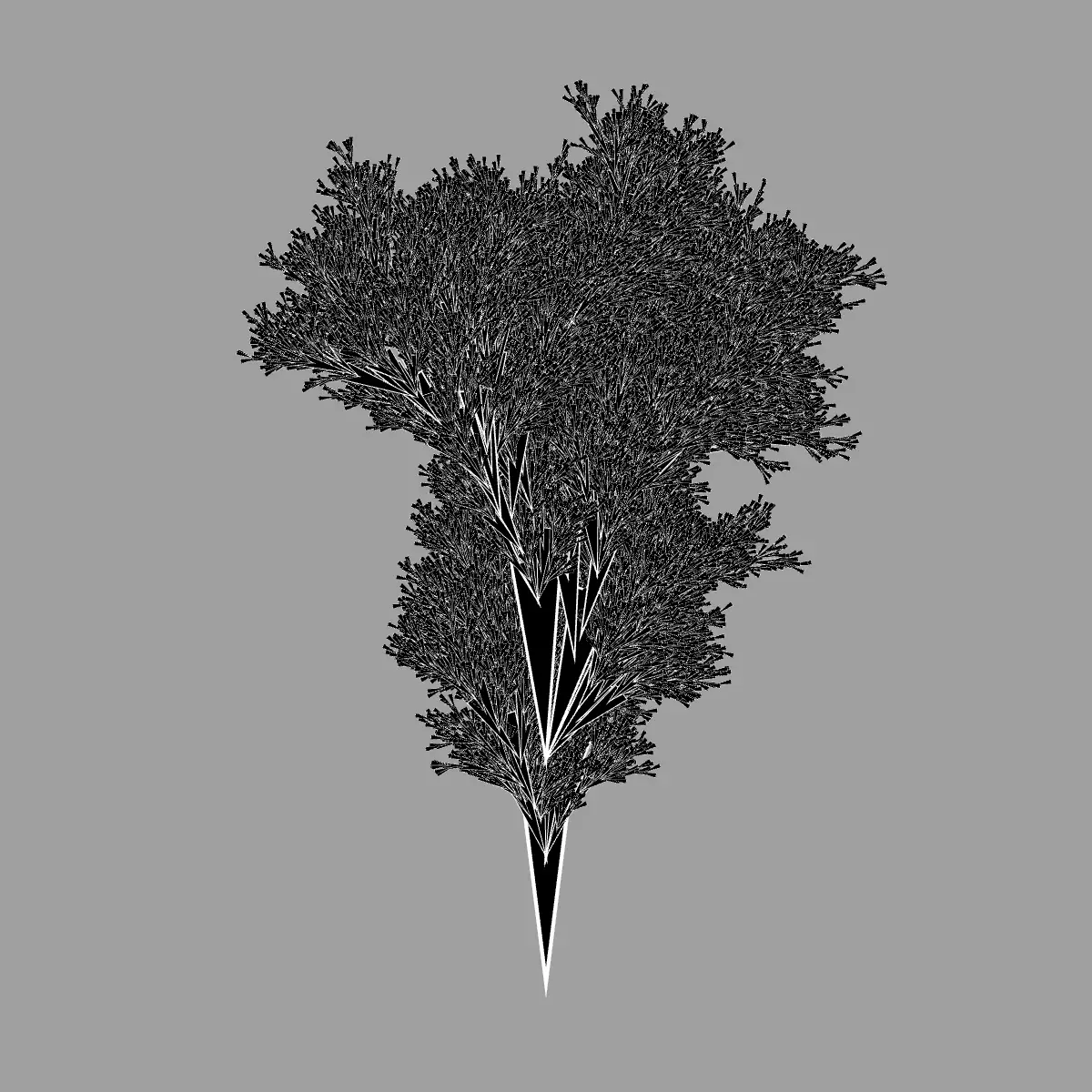
10 generations
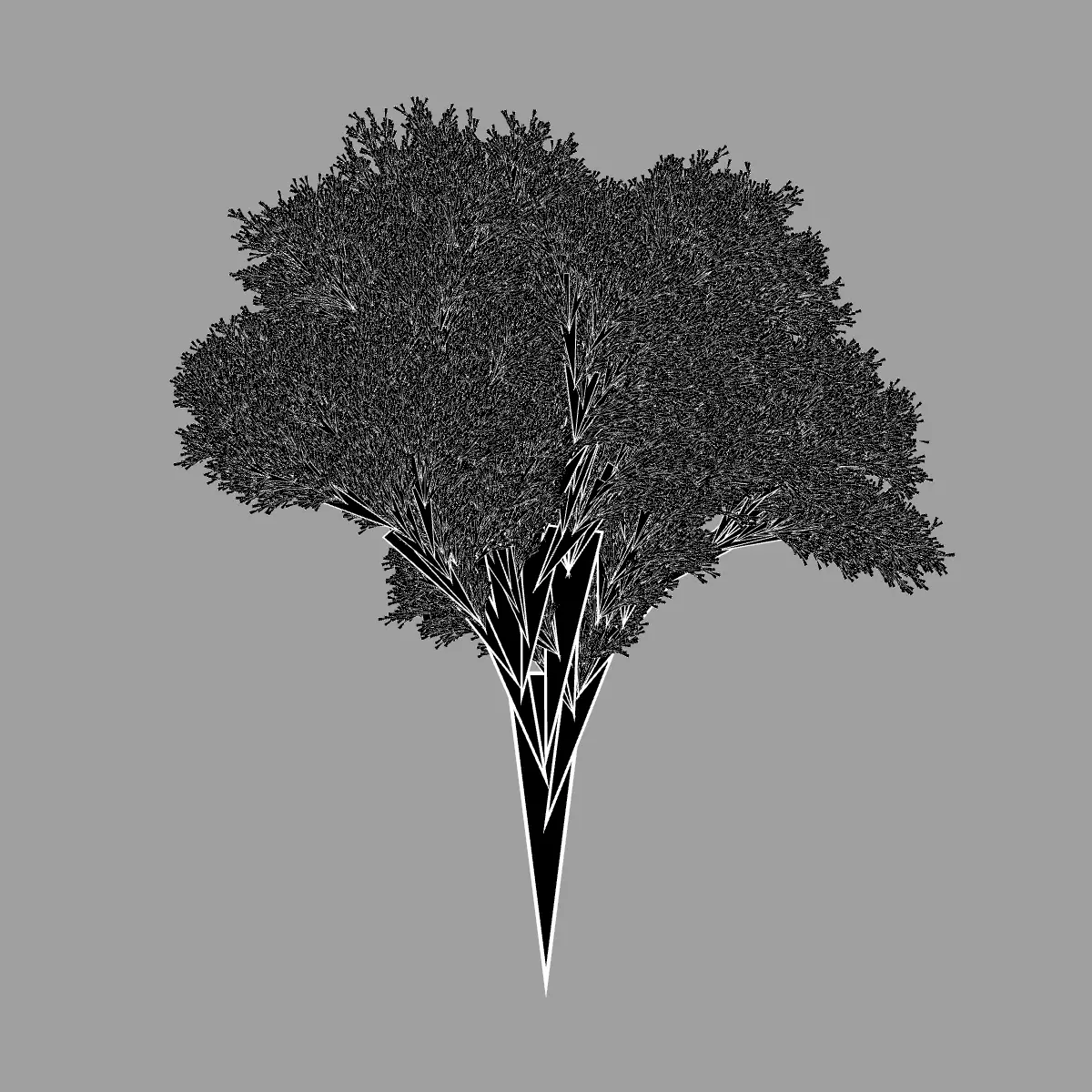
11 generations
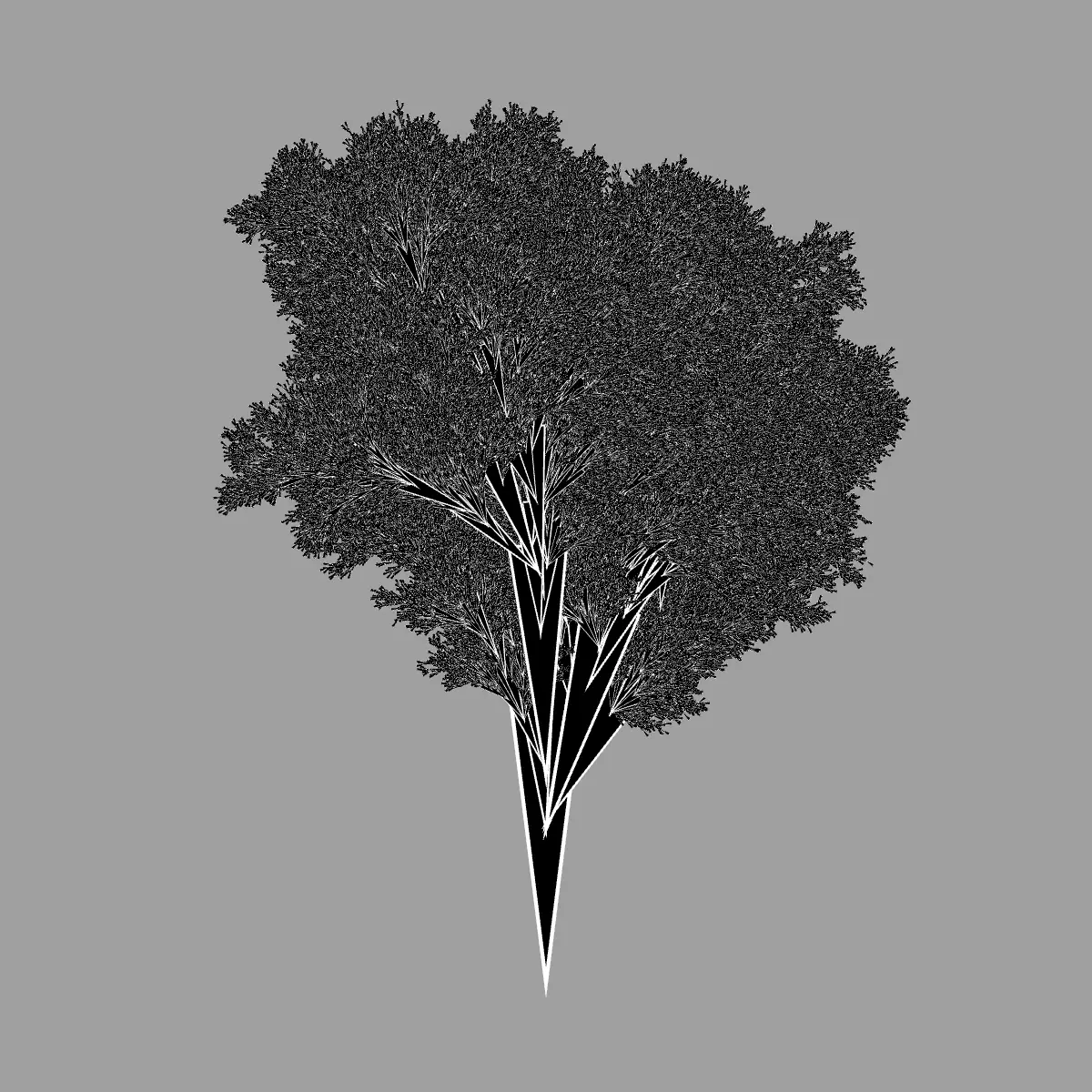
12 generations
Progressive evolution of the tree from 2 to 12 generations (with differents seeds)
Generative System
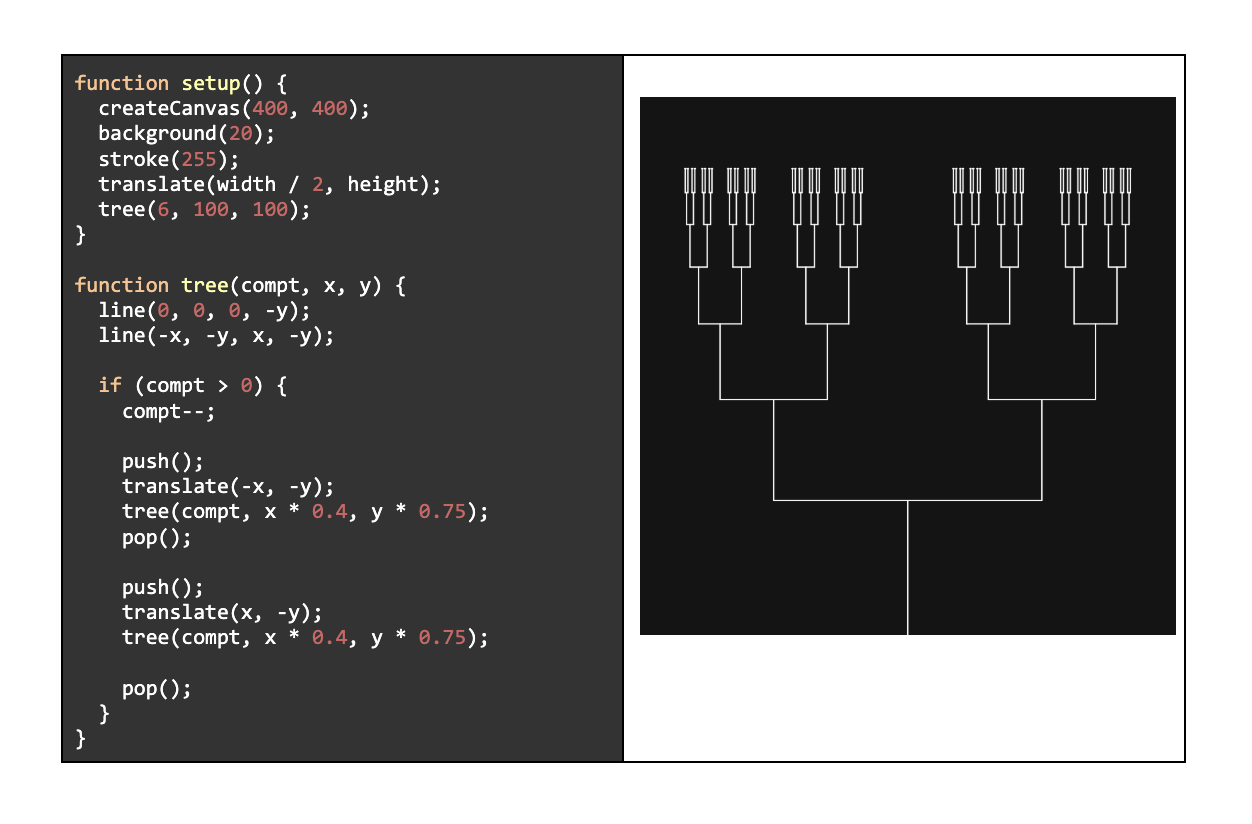
The artwork is generated in P5.js using a recursive function that draws one triangle, then spawns new branches by calling itself several times with a smaller offset. The process combines:
- Recursion (branching structure)
- Scale decay (each generation shrinks)
- Rotation variance (organic divergence)
- Occasional vertical jitter (breaks perfect symmetry)
Recursion
Recursion is a technique where a function calls itself.
Parameters and variations
Here, each call draws a triangle at the current origin, then creates new “branches” by translating and rotating the coordinate system, and calling the function again with a smaller size.
The tree is driven by a few key parameters:
- R: recursion depth (randomized between 7 and 10)
- offset: initial branch size (e.g. 170), decays by 0.75 each step
- rotation ranges: controls how “wild” the tree branches
- vertical jitter: occasionally disrupts perfect growth for a more organic feel
Changing these values can shift the result from a minimal pine-like silhouette to chaotic coral-like growth.
Human-written code
Human-written code, algorithmic art. No AI-generated imagery — only geometry, rules, and controlled variation.
Status
This is an open sketch: a compact algorithm I can reuse as a base for future explorations around organic geometry, typography-as-branches, or shader-driven lighting — always keeping the constraint: triangles only.
Thanks for sticking around till the end!