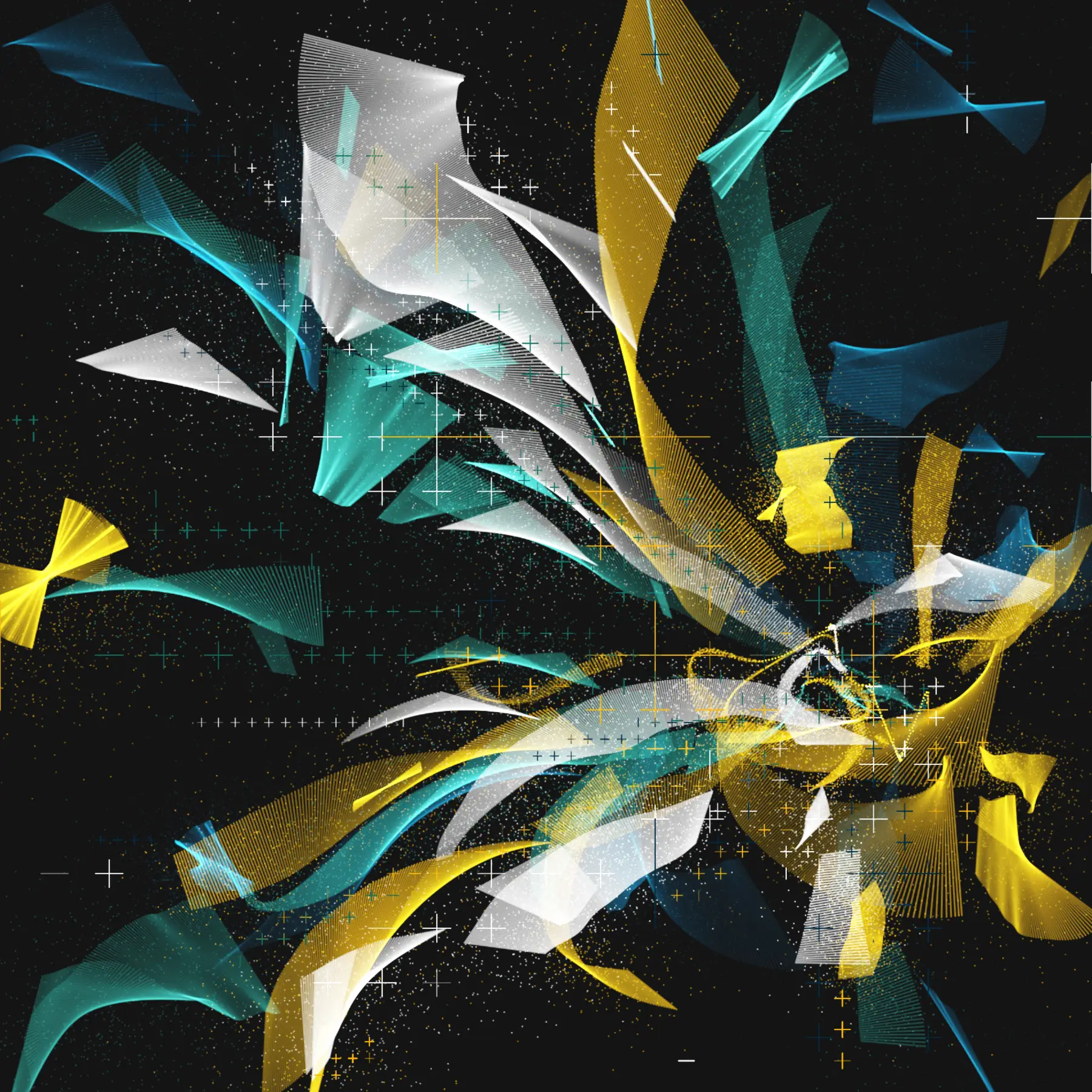
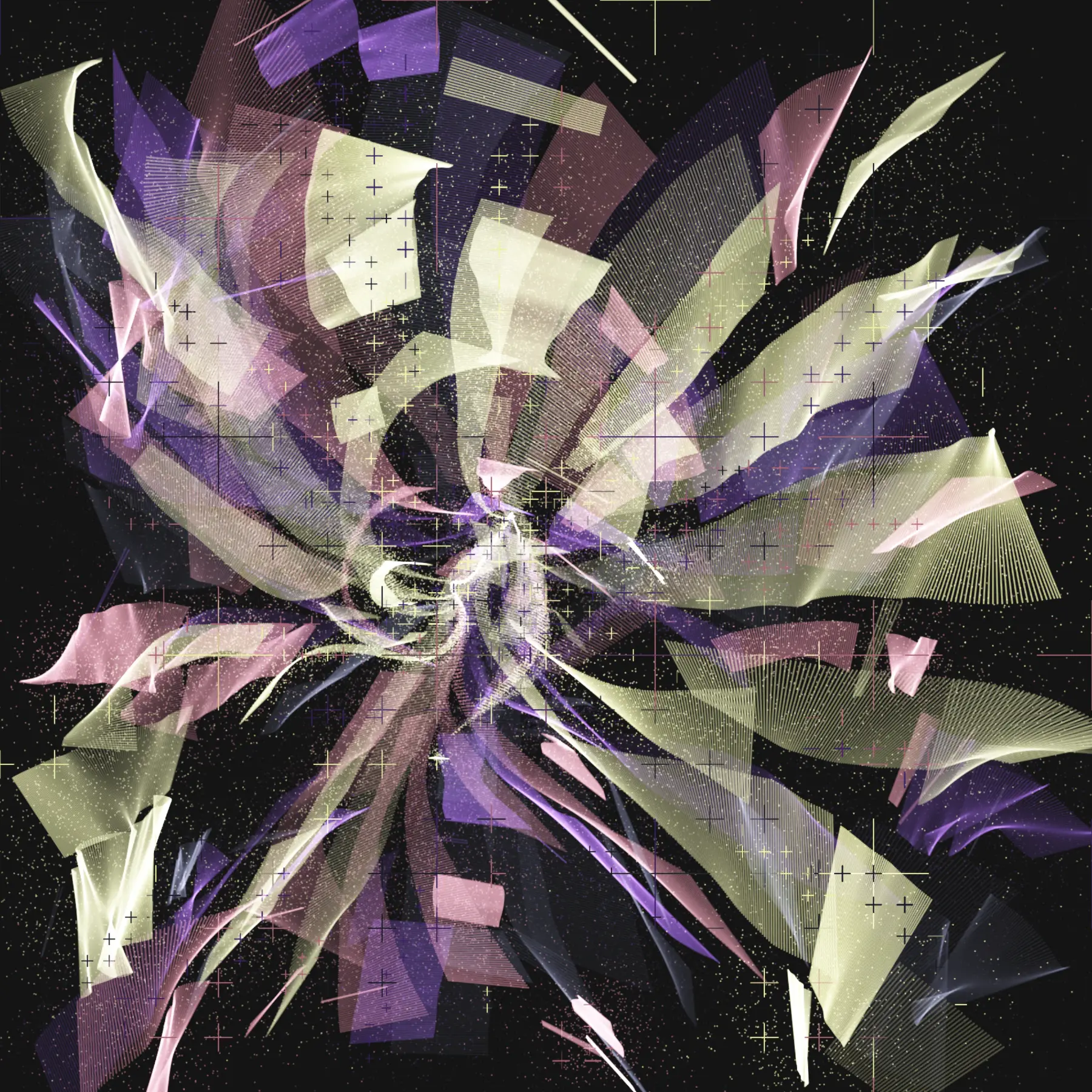
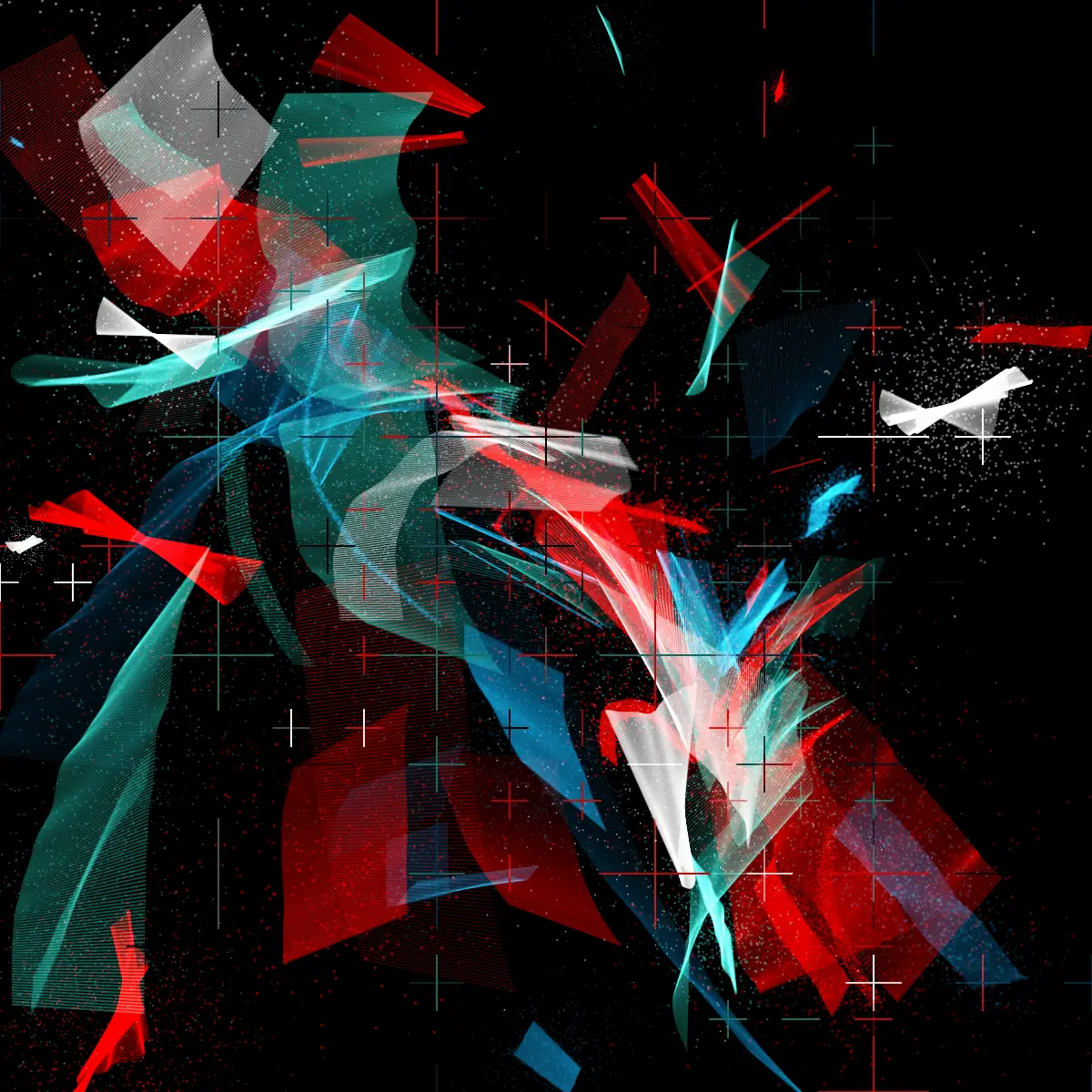
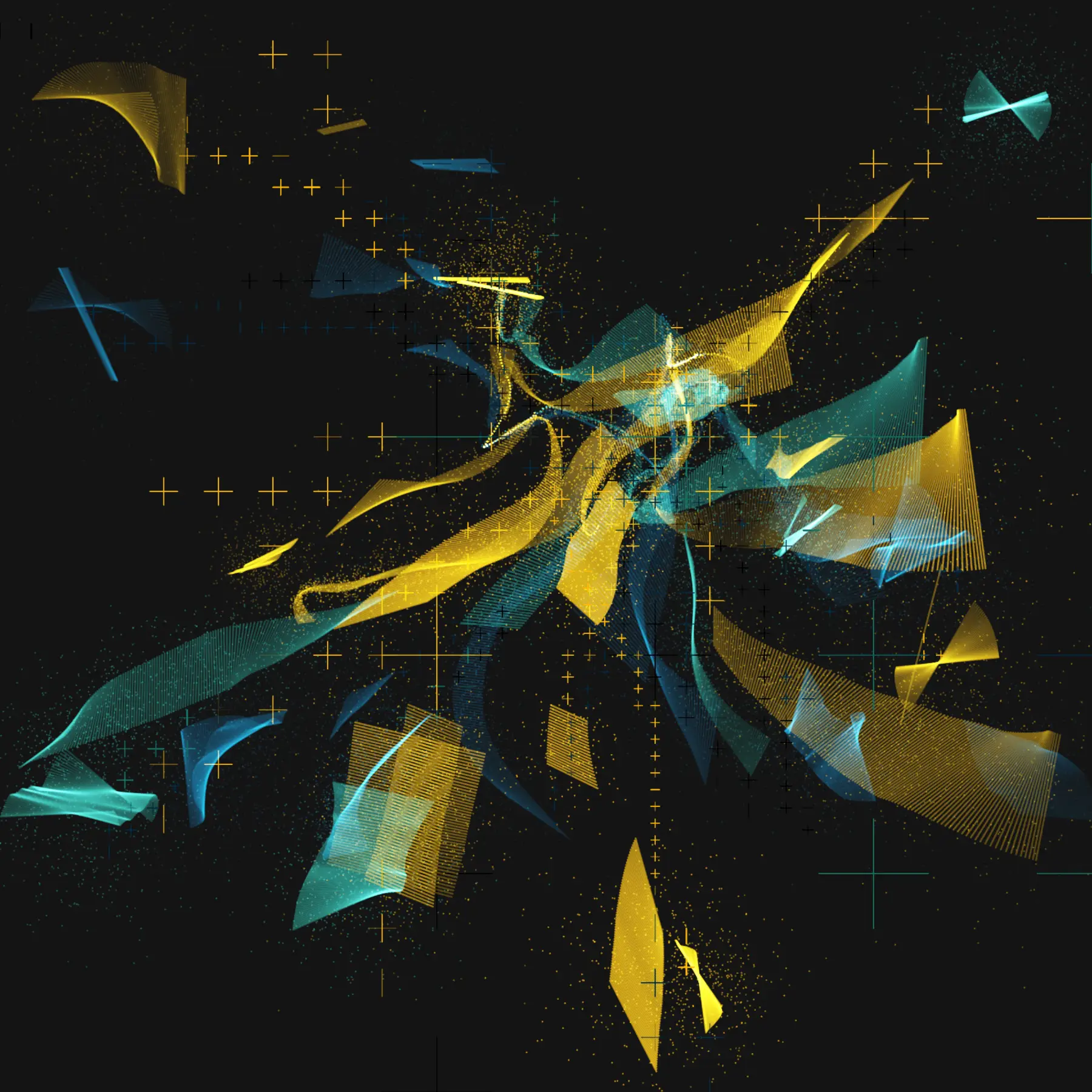
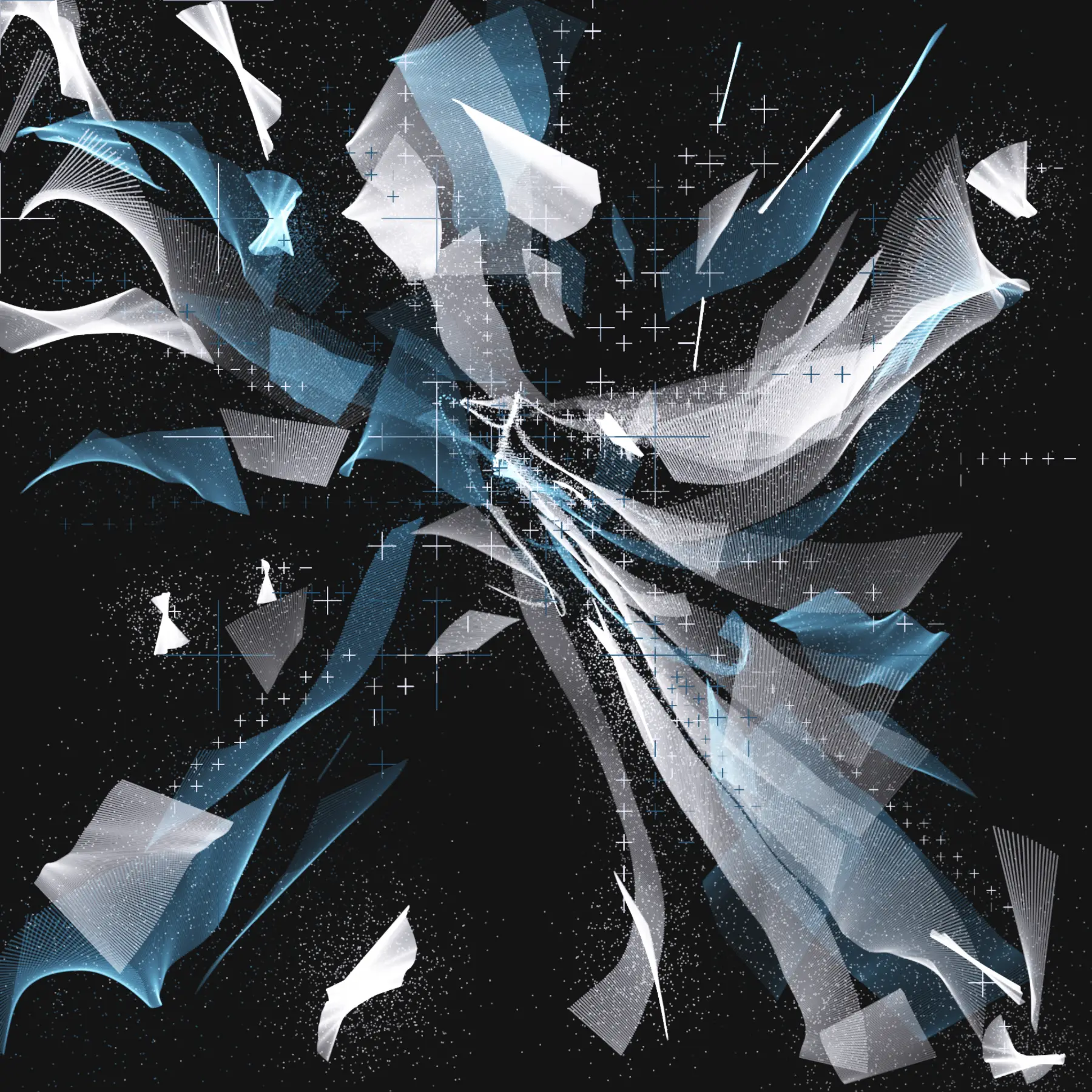
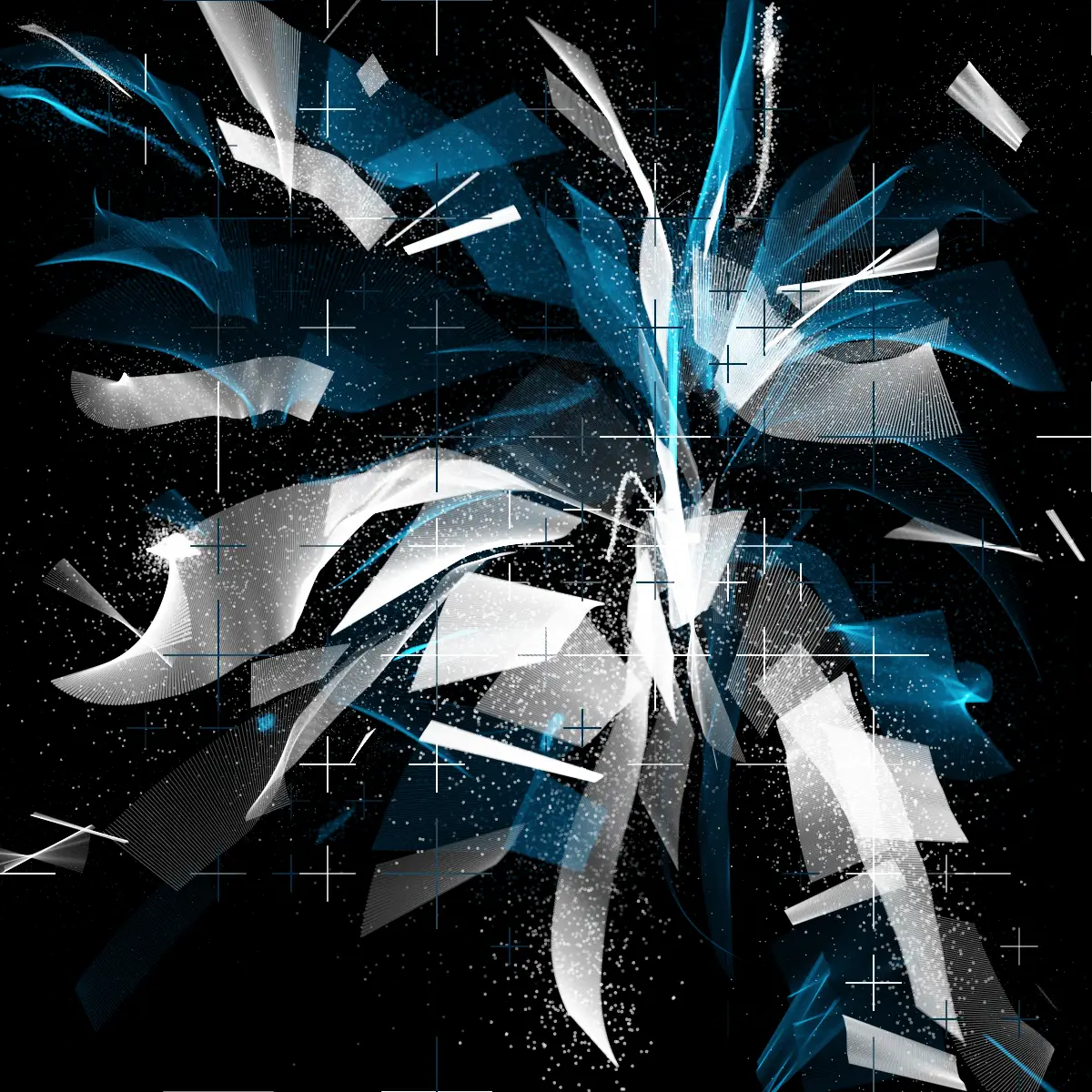
Order / Disorder Field
A swarm-driven drawing system where particles alternate between free-flow motion and grid-locked discipline. Noise steers the target, thresholds flip behaviors, and SCREEN-blended strokes crystallize into fragile structures—then dissolve again.
A Genuary 2026 project
This piece was created for Genuary 2026, a month-long creative coding challenge where artists build a new generative artwork every day from a shared prompt.
Genuary 2026 · Jan. 16
Order and disorder(credit: Ivan Dianov)
In this interpretation, disorder is embodied by the wandering target point, which drifts unpredictably across the canvas, driven by noise and continuous variation. Order, on the other hand, emerges from the natural attraction behavior of the particles: simple physical-like steering rules create coherent motion, suggesting that structure can arise organically from movement itself.
Concept
The drawing lives in a constant negotiation: moments of drift and turbulence suddenly “click” into structure. Order appears as an imposed grid logic; disorder returns through swarm motion, opacity fluctuations, and the instability of attraction.
Where it goes, final result
Order is not imposed from the outside — it is a temporary state inside a dynamic system.
Generative System
The artwork is built with a particle system in P5.js. Each particle is born at random positions and moves under the influence of a continuously shifting attractor. The attractor itself is driven by Perlin noise, producing smooth trajectories instead of chaotic jumps.
Particles compute a steering force toward the target and update their velocity accordingly. Over time, thousands of semi-transparent marks accumulate, forming a layered visual memory.
Attractor behavior over time in red, particles in white
Order vs Disorder Mechanism
Each particle contains an internal timing parameter. During one phase, it behaves in a fluid, expressive way — drawing luminous rotating strokes and scattered points. During the other phase, it “locks” into order: it snaps to the nearest line of an imaginary grid and produces short orthogonal marks.
Disorder
Attractor behavior on rotating strokes
Order
Order
This oscillation between free motion and geometric constraint is the core of the piece.
Full System
Palette and Light
Each run selects a reduced palette from a predefined set. Opacity fluctuates through noise modulation, allowing colors to bloom and fade like signals. The result feels unstable yet coherent — a visual system hovering between collapse and crystallization.

Each run selects a reduced palette from a predefined set
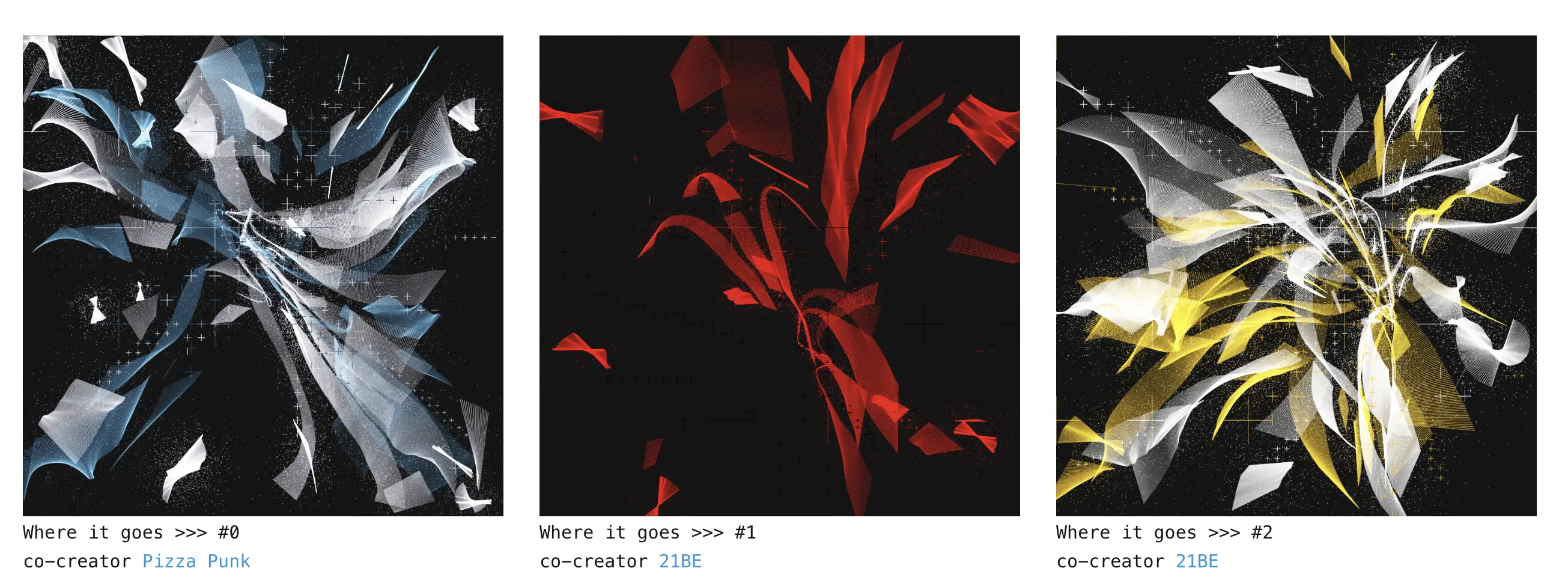
Some results on editArt.xyz
Time and Completion
The system runs for a finite number of frames, then stops. What remains is a fossil of motion — a record of attraction, switching logic, and accumulated traces.
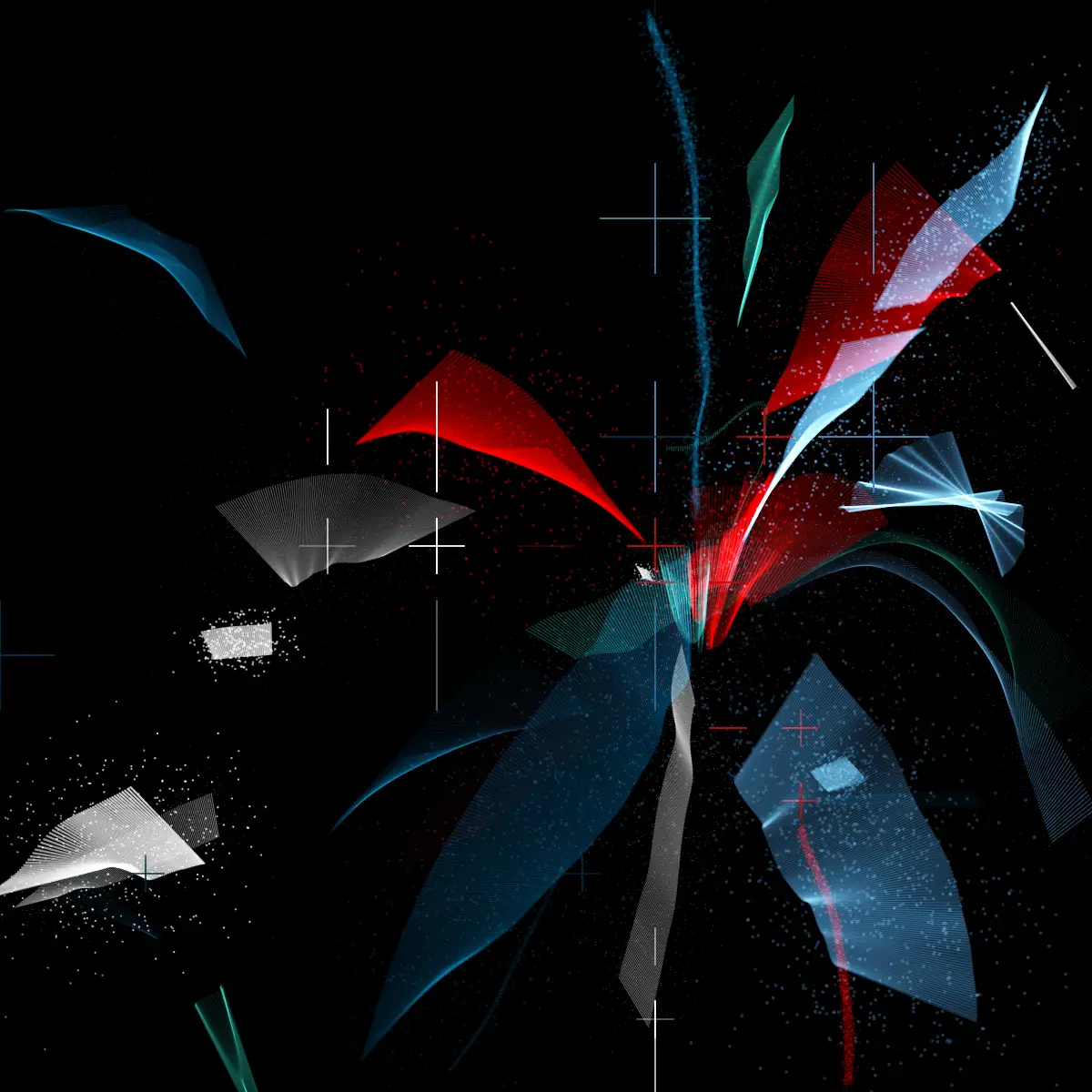
200 frames
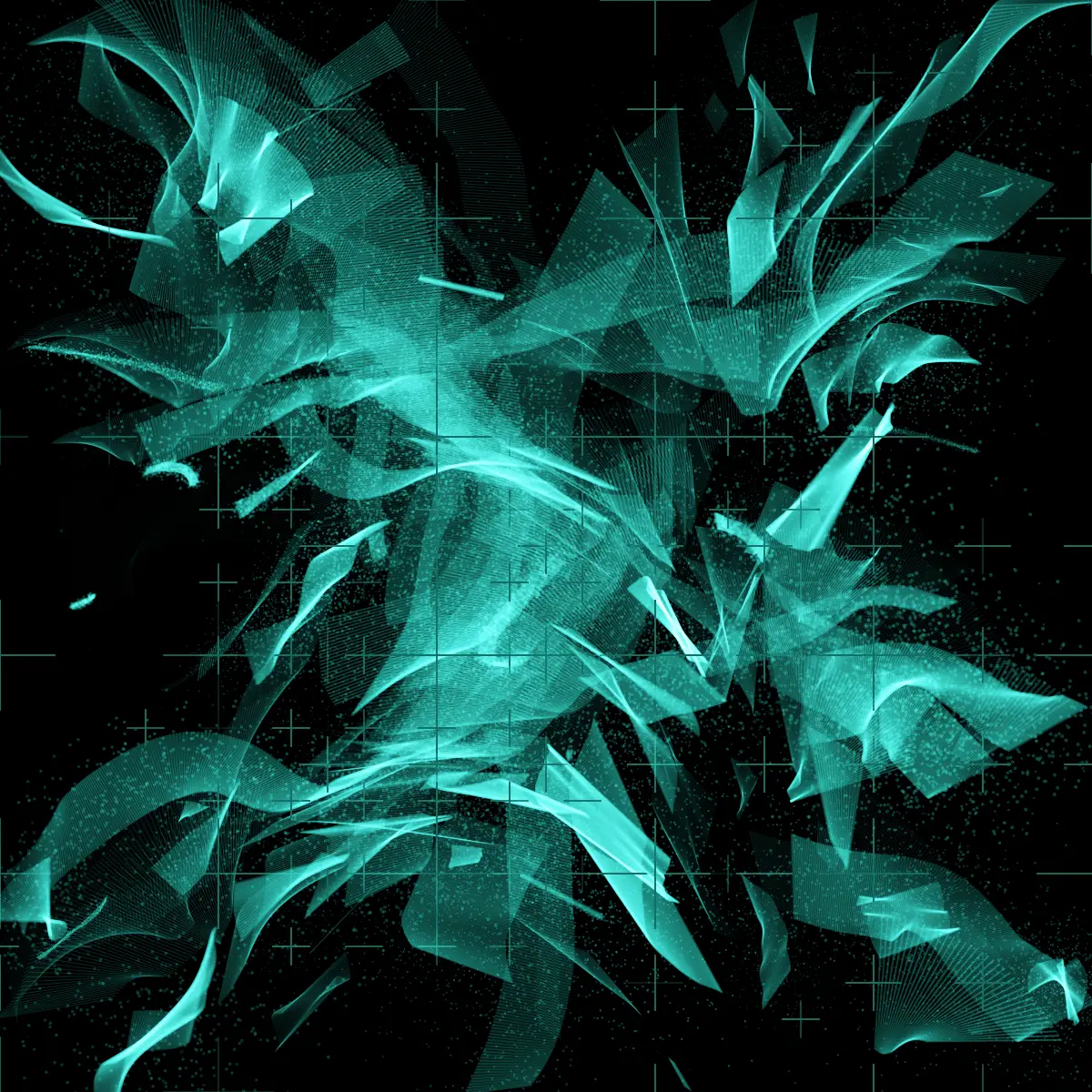
450 frames
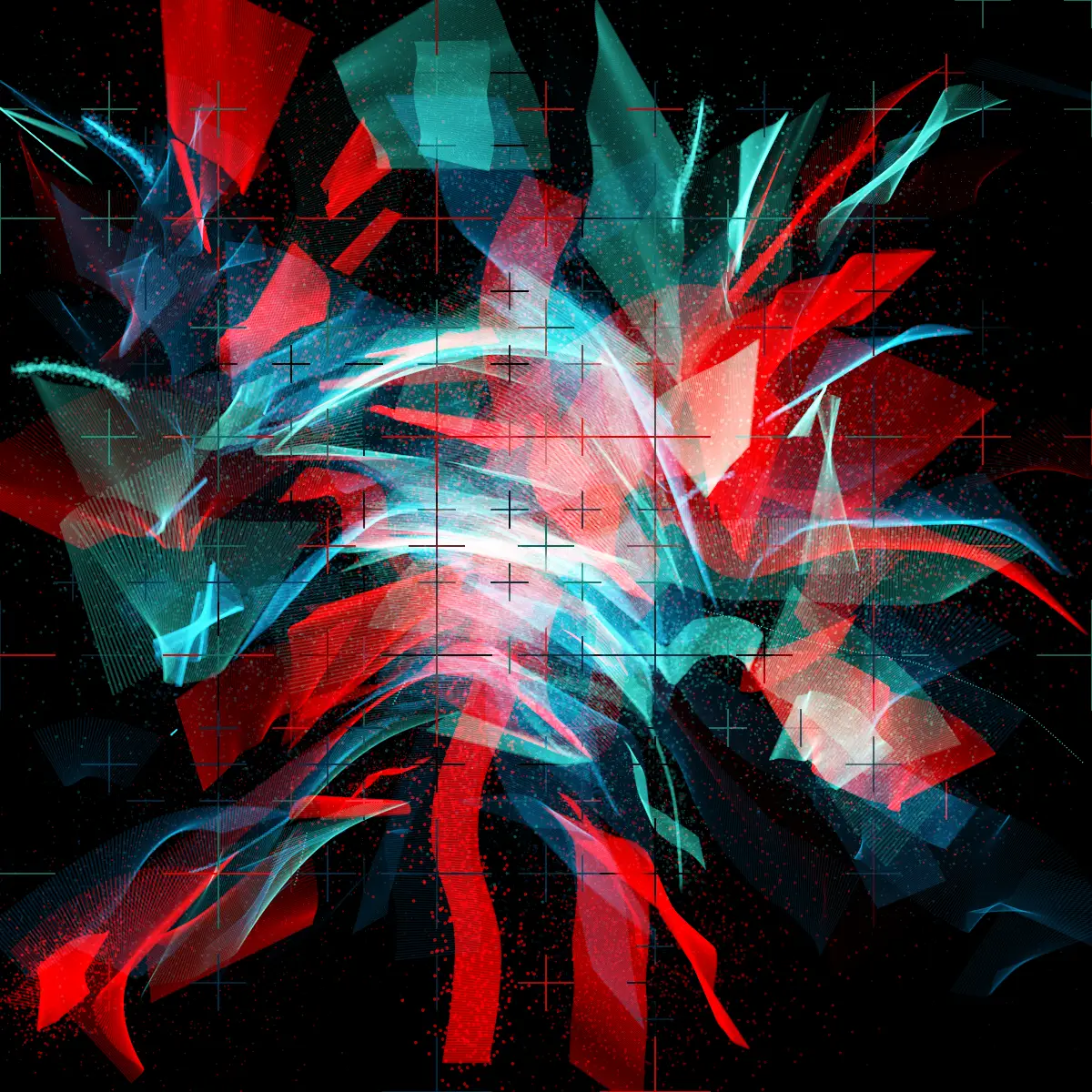
700 frames
Different lifetimes (with differents seeds)
Co-Creation on EditArt
Released on EditArt, this project allowed collectors to mint unique outputs generated from the same code base. The full edition — 20 pieces — sold out in under 24 hours.
Each token is a different equilibrium point between order and disorder.
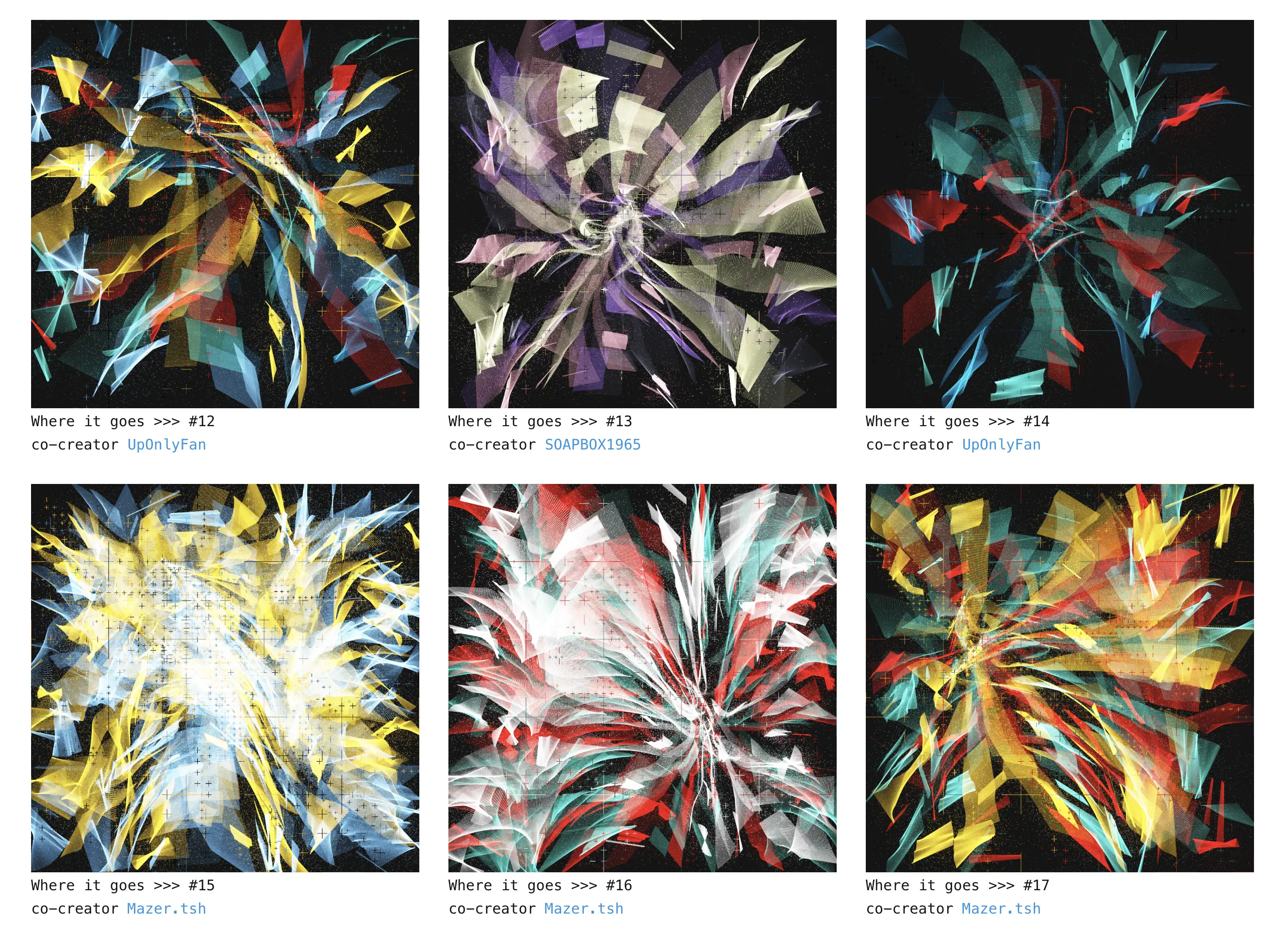
Some co-creations on EditArt
Human-written code
Human-written code, algorithmic art. No AI-generated imagery, only geometry, rules, physics and controlled variation.
Thanks for sticking around till the end!